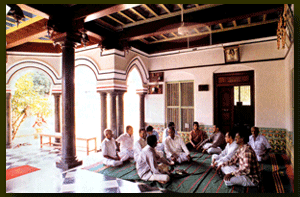
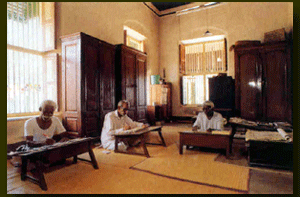
The Chettinad houses are built on a rectangular traversal plot that stretches across two streets, with the front door opening into the first street and the back into the second. Looking in from the main threshold, your eye travels in a straight line across a series of inner courtyards, each a diminishing rectangle of light, leading out to the back door.
First comes an outer thinai - Large raised platforms on either side of the central corridor, where the host would entertain male guests. The platforms lead off on one side into store rooms and massive granaries and on the other, into the ( Kanakupillai ) or Accountant's room.This area also usually leads off to the men's well. From here, the huge elaborately carved teak front door, with image of Lakshmi carved over the head and navaratna or nine precious gems buried under the ( Vasapadi) threshold. The door leads into the first open air courtyard, with pillared corridors running on each side that lead into individual rooms, each meant for a married son, each with a triangular slot cut into the wall for the evening lamp. Then comes the second counrtyard with large dining spaces on either side. The third courtyard was for the women folk to rest and gossip, while the fourth, or nalankattai comprised the kitchens, leading out to the backyard with its women's well and grinding stones. The wealthier the merchants the larger the house, often spreading out to a second floor. |
||
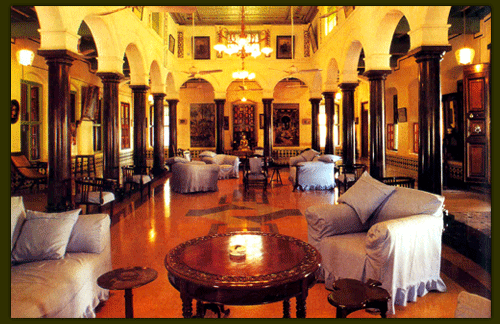 AMM House in Pallathur |
||
The walls are of baked bricks, plastered over by a secret recipe of roots, yolk and lime that leaves them silken smooth and washable; the tiles are Spanish; the floors of Italian marble or locally - crafted Athangudi tiles; and the pillars of Burmese teak, many houses have small turrets and elaborate guard houses on the terrace. The carvings and friezes are not just Hindu pantheon but include British soldiers, Victorian women, and scenes from the Raj. The chettiar's main intent was to make his house a statement of his social success and he put everything into it, but the pastiche of styles - Kerala Woodwork, neo-classical, Victorian, Anglo-Indian - is Strangely not Vulgar. The airy courtyards seem somehow to absorb and mute everything down inside. The outside are not always so lucky - colours, curves, domes and arches often clash painfully but the message of splendour is not lost.
The display of wealth extended to other areas. At the chettinad railway station, exactly opposite where the Raja of chettinad's first - class coach would halt, a paved path leads through an arched gate to his private waiting room, where he went directly without having to mix with the rabble at the station. The waiting room and attached toilets are still furnished, with superb divans, recliners bidets and washbasins, all in various stages of disrepair. There are three smaller such buildings around, for lesser personages and family guests. The practical detail inside the houses are rich: the courtyards supply ample light and air ( pickles and papads were dried there ) but leaving the rest of the house in deep and cool shadow. The courtyards have tiles placed exactly under the strom-water drain run right through the house, with stone stoppers carved exactly for their mouths. Large stone vats for water and wooden bins for firewood line the inner courtyards. |
||
|
||
Walking through ghostly corridors looming with huge portraits and Belgian mirrors, feet crunching on years of bat droppings that cover exquisite floor tiles.... it's easy to imagine these houses asleep in some sort of time capsule. But it's unlikely they will stay that way. Already an immense portion of the chettiar families belongings - pewter, brass porcelain, glass Burmese bamboo - is in the local antique shops and being shipped across the world. Houses are being dismantled and sold piece-meal, with carved doors, pillars and friezes in high demand in India and abroad. Some Chettiars have stepped in to start the process of conservation. The Meyyappans have converted the family clubhouse into The bangala, preserving its past graciously while the S.A.R. Muthiah family has opened up some rooms in its vast family mansion to tourists for a home-living experience. Muthiah Chettiar, the Raja of Chettinad, has opened his house in Kanadukathan for public viewing, while his brother's house next door has a floor converted to a museum that displays everything associated with the Chettiars - masala dabbas and Rukmini ( choppers), coconut scrapers and travelling spice boxes. The Tamil Nadu government is making noises about converting this into a tourist zone, revitalising the lost art of Chettinad plastering, converting the bungalows into bed-and breakfast outlets. We can only wait with trepidation to see the outcome of these plans. Walking though the mansions, we find many rooms tightly locked. with the individual owners' names carved on door sills. The caretakers tell me the rooms are still full of vessels, artefacts, Kitchen tools and furniture, waiting for their owners to claim them. Some families do return occasionally, for weddings and big days, but the occasions become fewer with time. |